Hello There

My thoughts about Traditional Witchcraft, Wicca, cooking, gardening, and anything else that catches my fancy.

Saturday, February 18, 2012

The Hawthorn and the Blackberry

This weekend, I've gone to visit my aunt. She lives "out in the country" as we say; that is, in a rural area. We used to spend a lot of our summers here as children, and the place has many fond memories for me. As an adult, and especially as a Witch, I don't think that I get to spend nearly as much time out in Nature as I would like to or is good for me.

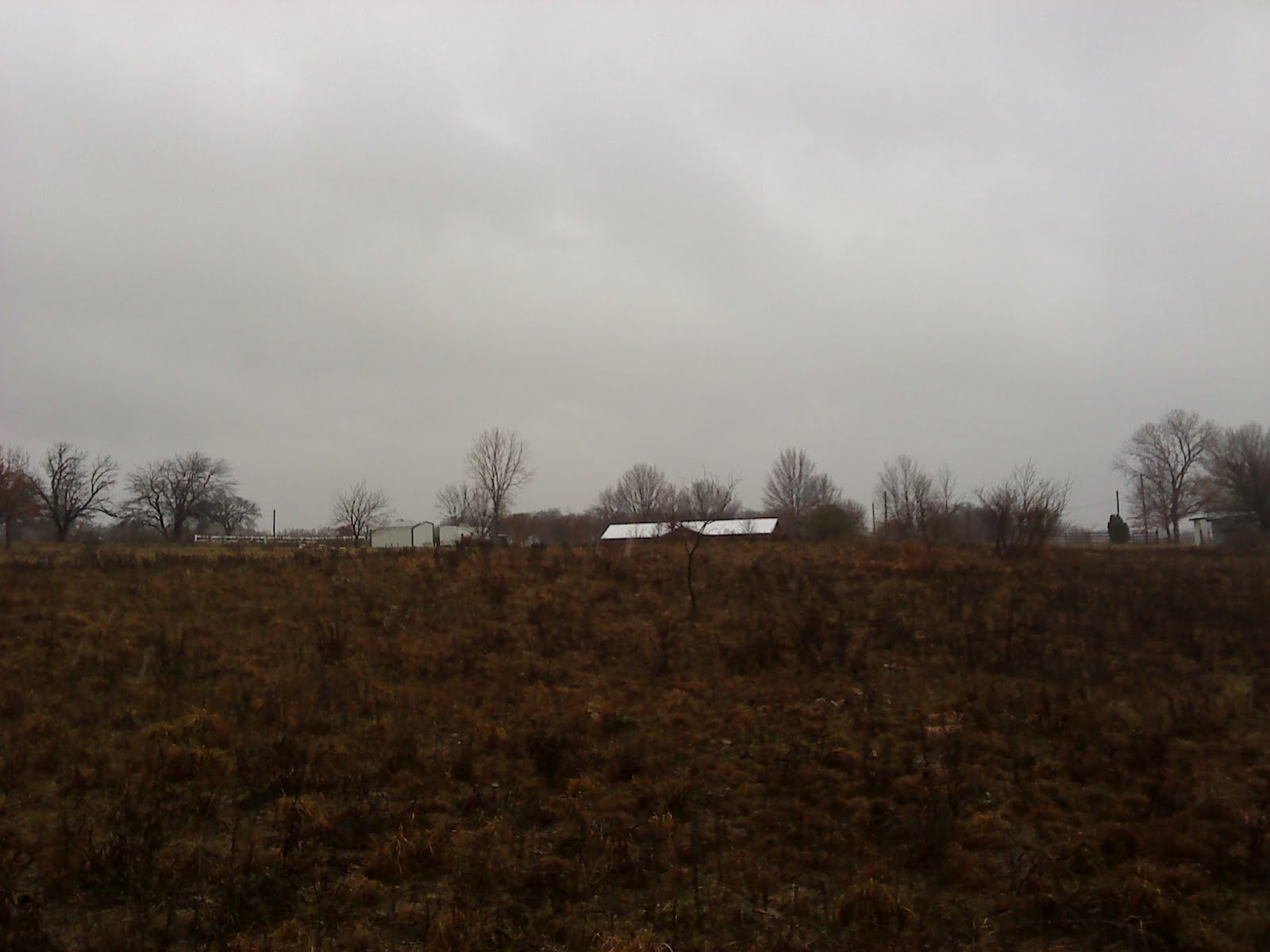
My aunt is really awesome. She grows a lot of her own food, and she makes the best pickles and hot sauce ever. They live on a large-ish piece of land, so they've got room for a huge garden, fruit trees, and a big pasture full of native grasses, trees, and blackberries. On this trip, I was meant to come and help prune the apple, almond, and peach trees, and was going to be given the wood to take home with me. I may have mentioned, I want to start my own little mail order Witch shop, and the wood would be excellent for making wands. Alas, though, it's been pouring rain almost since I arrived, and thus isn't really good working outside weather. However, while chatting about trees, I told my aunt that my favourite was the Hawthorn, and told her about my desire to make Hawthorn jam. To my surprise, when I described the tree, she suddenly said, "That sounds like something we've got growing out back!" Apparently, they've had a mystery tree out in the pasture for 30 years. They never knew what it was, and almost cut it down. (Needless to say, they won't be cutting it down now....they're delighted to have such a tasty and useful tree nearby!)


So, despite the rain, I had to go check and see if it was indeed a Hawthorn. I put on some old boots and a heavy grey cape, opened my umbrella, and set off. Sure enough, when I arrived at the tree, it was immediately obvious: it was a Hawthorn all right. Not only that, but I spotted another, smaller one about 30 feet away. The smaller one is too small to cut anything from, but the big one certainly isn't, and I'm going to be harvesting some wood before I go home.


I tramped about in the field some more before coming inside, and had a peek at the blackberry patch. I've been wanting to make a Witch's whisk from the dried blackberry stalks, so I'm going to be harvesting some tomorrow for that. There may be a few more useful herbs and such that I can find; I'm just hoping it dries out a wee bit so I can search without sinking into the mud!


Right now, I am sitting in front of a roasting fire and having a very nice day. It's definitely been a great weekend, and it's been lovely to catch up with my family and spend some time out in Nature.

Tuesday, February 14, 2012

Tuesday, January 31, 2012

Season Of The Witch

I am now the proud owner of my very own DVD copy of George Romero's overlooked '72 film, "Season of the Witch." The movie, originally titled "Jack's Wife," chronicles the story of an insecure, borderline-abused housewife named Joan. Approaching 40, she's ignored by her boorish husband, and feels irrelevant compared to her modern, "hip" daughter. Joan seems to have little outlet but weekly bridge games and drinking, and her closest friend is an alcoholic older woman who fills her head with horror stories about aging.

That is, until Joan takes up Witchcraft. After her friend Shirley mentions knowing a "real Witch," Joan is intrigued and the two women end up visiting the Witch, Marion, for a Tarot reading. Simultaneously frightened and captivated by how accurate the reading is, Joan buys a book (which we will get back to in a minute) on Witchcraft and hits up the antique store and organic foods shop to pick up the tools and herbs she will need to cast her spells. This delightful little segment, which takes place in a montage set to Donovan's "Season of the Witch" tune, brings back memories of myself as a young teenager, having to shop at Whole Foods and the thrift stores trying to find herbs, oils, cauldrons, and such as there were very few Witch shops then, and no internet to order from.


The movie takes an interesting approach to her Witchcraft (which is presented in a very realistic, straightforward manner.) Does she have real powers, or not? Do the ensuing events (some of which are either tragic or fortunate, depending on how you look at it) occur because of Joan's spells, or are they merely coincidence? By avoiding the typical Hollywood thing of either making the magic totally unrealistic (no lighting bolts from the fingertips here) or else showing it as dangerous and Satanic, Joan's actions seem completely believable. The film isn't perfect, and drags in some places, but it's still highly recommended if you want to catch a glimpse of Witchcraft before the modern "McWicca" fad (just be sure NOT to get one of the inferior, heavily edited versions of the film, in which so much is cut out that the plot is destroyed.)


Oh, and the book I mentioned from the film? In the movie, it's called "To Be A Witch" but, to those in the know, it's actually a BARELY fictionalized copy of "Mastering Witchcraft." It's all there, with Joan drawing the runes on her magical tools, consecrating her knife with salt and water, and drawing the talismans. Even the spells she says are more or less the same, with only a word or two altered. I've heard that Romero had some friends who were Gardnerian Wiccans or other kinds of Witches, and it really shows in how accurate his portrayal is. It's definitely a treat to see "Mastering Witchcraft" (about which there has been a lot of talk lately) show up in some a prominent position in a film, even in a fictionalized form.

Wednesday, January 18, 2012

Plant Spirits, Sacred Woods, and the Source of Magic

As I have mentioned previously, the magic of trees and woods is one of my special areas of interest, so I thought I’d write a more detailed article to share my knowledge of them. In the occult community, there is much talk about the “magical properties” of certain woods, but little discussion as to WHY those woods have those properties, or where that power comes from.

Obviously, the most popular use of wood in magical practice is in the construction wooden wand or staff. The most common woods used for such tools are Hazel, for the wand, and Ash for the staff. Hazel is the wood of inspiration and divination, and Ash is the wood of the World Tree. For the blasting rod, or cursing stick, Blackthorn is most commonly used. But why these? Are these things “just tools” which have no power other than that which we give them? Or, do they have their indwelling energy, which we can harness to our own ends?

The power of woods, trees, and plants comes not from the assignment we “give” them, but from the spirit indwelling in the plant….of which there are two types. The first type is the spirit which lives within the individual tree or plant itself, and which is unique to that specimen. This spirit can die or be destroyed with the death of the plant in question. The second type is the spirit which is specific to the particular KIND of plant, and is common to the whole species. For example, Hazel has a common spirit which can be found present in each and every tree. It is this indwelling spirit which gives magical tools their power, and what differentiates the “dead” wood used to make, say, a table, from the wood used by occultists. It is also this spirit which empowers herbal magic, and which gives magical potions, incenses, and brews their ability to create change. A large part of the path of the Witch is learning to work with these plant spirits, learning their abilities, and mastering the ability to utilize them to create change or gain gnosis.

For whatever reason, all too often this kind of work is either neglected, or completely pushed aside. Perhaps even more damaging, there’s been a lot of talk lately that magic is purely some kind of “mental shift” or “change in consciousness.” Others make the odd claim that nothing really has magical power other than that which we assign it, which in fact makes little sense. If this were true, then it wouldn’t matter what herb was used in a spell, as a handful of sawdust would have the same effect as even the most carefully prepared potion. This is more or less the equivalent of throwing everything in the kitchen pantry into the oven, and claiming that the mess that comes out is a “cake” merely because you want it to be.

To carry the cooking metaphor even further, I like to think of working magic as preparing a recipe. What you include depends on the desired result. Just as mixing salt and alum will never create a sweet batter (no matter how much you might “will” it to) using the wrong magical tools will not result in a successful spell. This is why magical history is so important, as we can draw upon the thousands of years of magical lore and correspondences. Learning the lore of the plants, trees, and natural world are vastly important if one is going to have a successful magical practice.

If you attempt to draw solely on your own power during magic, you will quickly become exhausted. If, however, you learn to draw upon the power of the natural world, you will be tapping into a vast well of mystical energy that can aid you in your work. Taking the time to learn the powers of the natural world all around you can aid you immeasurably, and mean the difference between magical failure, and magical success.

Wednesday, January 4, 2012

Happy Birthday to Doreen Valiente

Today, January 4th, is what would have been Doreen Valiente's 90th birthday. If you've been following my blog, you'll already know in what high regard I her work; truly, she has inspired me more than any other author, dead or alive. Some people are Gardnerian, some are Alexandrian, but if I had to label the "flavour" of my own practice, it would probably be Valientean.

I think what I like best about her writing is how she managed to bridge the gap between Wicca and Trad Craft, and how she was able to effectively convey deep occult truths in a simple and easy to understand format. She was there right at the beginning of the modern Witchcraft revival, worked with both Gerald Gardner and Robert Cochrane, and yet wasn't afraid to puncture overblown egos or demolish popular legends when the truth needed to be told. Finally, of course, I absolutely must mention her amazing, magical way with words. Her poetry and chants went a long way in creating the Wiccan liturgy, and her version of "The Charge of the Goddess" is known the world over. My own book contains many of her published Witch songs and chants, as they really capture the feeling of magic and timelessness experienced when celebrating a Sabbat or even having a quiet, personal moment with the Old Ones.

So, happy birthday, Doreen! Thank you for everything you did, and the legacy you left behind. I certainly wouldn't be the Witch I am today without it.


Doreen Valiente
January 4th 1922 - September 1st 1999

Wednesday, December 21, 2011

Bread and Butter Pudding


It's been simply AGES since I posted a recipe on here; in the old days, I would document a lot of my cooking, but I've fallen out of the habit of it. So, to shake things up a bit, here's the recipe for my very favourite bread and butter pudding. It's actually from Paula Deen, but I've tweaked it a little bit to customize it. I made one for Thanksgiving, and it was a big hit.

Bread and Butter Pudding Recipe

5 slices of good white bread, crusts removed
2 tbs. softened butter
4 cups whole milk (do NOT use diet "milk" or non-fat anything)
6 large eggs
1 cup sugar
1 tsp. vanilla
Cinnamon and nutmeg

Remove the crusts from the bread, and let it sit out on the counter for several hours or overnight to harden it up a bit. Preheat oven to 325. Next, lightly butter a 9X13 glass baking dish. Butter one side of the bread pieces, and place them butter side up in the dish. Scald the milk in a heavy saucepan over medium heat until bubbles appear; be careful not to burn it. Slightly beat the eggs in a large mixing bowl, and then whisk in the vanilla and sugar. Very slowly whisk in the hot milk, and then pour the mixture over the bread in the baking dish. Let stand for 10 minutes. Sprinkle cinnamon and nutmeg over the top, then put the baking dish in a large pan of hot water, with the water rising to slightly below the rim of the baking dish. Bake for around 40 minutes, or until knife inserted in middle comes out clean. You can serve this hot or cold, but I actually prefer it cold.

Below, you can see the buttered bread in the baking dish, waiting for the milk and egg mixture.


The finished product, below. This is easy to make, and good comfort food.

Friday, December 16, 2011

Thoughts On A Winter's Evening

I've not posted on here in a bit, so thought I should write a brief update. It's been an odd few weeks in my part of the world. Sadly, my grandmother passed away yesterday morning after a long illness. I'd gone to see her on Saturday (she was being cared for at home) and it was clear then that the end was near. Even though, in a way, it's a blessing that she is no longer ill, it's still always hard when somebody dies. I don't think, even with advance warning, you can ever really be ready for something like that. I've burned a candle for her, and said my prayer for the dead, and I am sure she's found her way now into the next world.

Because of that and other events, I've not been doing much Christmas/Yule related stuff. My sister and I finally bought a tree for my mother last night, and decorated it today. We've always had a live tree, and we didn't want this year to be the exception. I'm going to be doing a lot of baking this weekend, as I always give cookies for gifts, but I've not quite decided on what. On the Witch-related end, I've been pondering opening a small internet shop where I could retail my magical goods and wares; I've started making oils and ointments more and more, and have been considering whether or not I could sell some of the ones I have large amounts of. It's something I'm thinking about, I just need to see how much of an initial investment I'd have to make.

Finally, I rather belatedly ordered, and got, the November issue of "The Cauldron." It had some WONDERFUL articles in it, including pieces about the Witches of ancient Greece and their herbal knowledge, the Black Faced God in in Traditional Witchcraft, and about Aunt Caroline Dye. In addition, I've also learned that there's now a revised and updated version of Gemma Gary's classic "Traditional Witchcraft: A Cornish Book of Ways" which has been getting phenomenal reviews. I am a huge fan of the first edition, which I have, and fully plan on purchasing the new edition just as soon as some money comes in.

I do hope everybody is well, and having a good Holiday season.